
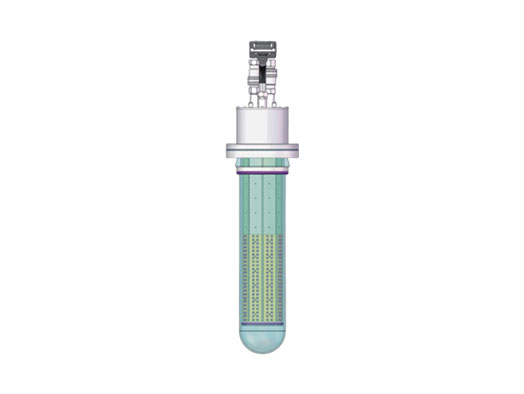
LED parallel light reactor technology for photochemistry is becoming an increasingly important solution for
modern chemical processing, process development, laboratory research, and scalable photochemical manufacturing.
As photochemistry continues to expand across pharmaceuticals, fine chemicals, specialty materials, and green
synthesis, the demand for precise, energy-efficient, and highly controllable light sources has grown rapidly.
A parallel light reactor designed with LED illumination offers a stable, uniform, and wavelength-targeted
lighting environment that supports reproducible photochemical reactions and improved process consistency.
This article provides an industry-focused overview of LED parallel light reactor technology for photochemistry.
It covers the definition, working principle, key advantages, typical specifications, design considerations,
common applications, performance factors, and procurement guidance. The content is written in a structure that
is suitable for SEO, blog publishing, category pages, and industry landing pages. It does not include specific
company recommendations, only general technical and market information.
LED parallel light reactor technology for photochemistry refers to a photochemical reaction system that uses
light-emitting diodes (LEDs) arranged in a parallel illumination structure to deliver consistent and controlled
light exposure to multiple reaction vessels or a larger reaction area. In photochemical applications, light
serves as the energy source that activates molecules, catalysts, or photocatalysts. The reactor design aims to
maximize photon efficiency, maintain uniform irradiation, and improve reaction repeatability.
The term “parallel light” usually describes an optical arrangement in which light is distributed in a more
controlled and relatively even pattern across the reaction zone. This design helps reduce shadowing, intensity
loss, and uneven exposure, which are common challenges in conventional photochemistry systems. When paired with
LED technology, the reactor becomes more flexible, energy efficient, and easier to tailor to specific
wavelengths such as ultraviolet, visible blue, green, or near-infrared.
Photochemistry depends heavily on the interaction between light and matter. The light source determines the
reaction pathway, conversion rate, selectivity, and in many cases the overall feasibility of the process. A
poorly designed reactor can cause inconsistent results, localized overheating, low photon utilization, or
poor scalability. LED parallel light reactor technology addresses these issues by offering better control over
light wavelength, intensity, and distribution.
For laboratories and industrial teams, this technology is valuable because it supports:
A typical LED parallel light reactor for photochemistry combines several core elements: LED light modules, optical
distribution structures, a reaction chamber, vessel holders or sample positioning systems, cooling components,
and a control interface. The reactor directs light from the LED source toward the reaction vessels in a way that
maintains stable illumination over the active area.
In operation, the LEDs emit photons at a selected wavelength or wavelength range. The light is then projected
through a parallel or semi-parallel optical path to create even exposure across the sample. This allows the
photochemical substrate, catalyst, or sensitizer to absorb light efficiently and undergo the desired reaction.
Depending on the system, the reactor may also include temperature monitoring, timed exposure settings, dimming
control, and safety shielding.
The core principle is simple: deliver the right wavelength, at the right intensity, with the right uniformity,
for the right duration. LED parallel light reactor technology makes this principle easier to apply in practical
photochemistry workflows.
Modern LED parallel light reactor systems are designed around performance, stability, and operational control.
Although the exact configuration varies, many systems share the following features:
| Feature | Function | Benefit in Photochemistry |
|---|---|---|
| LED wavelength selection | Provides specific light bands such as UV, blue, green, or red | Supports targeted activation of photochemical reactions |
| Parallel optical design | Distributes light evenly over the reaction area | Improves uniformity and reproducibility |
| Adjustable intensity | Allows output tuning based on reaction needs | Helps optimize conversion and selectivity |
| Temperature control | Manages heat produced by LEDs or the reaction | Reduces thermal side reactions and supports stable operation |
| Reaction vessel compatibility | Supports multiple vial, flask, or plate formats | Enhances flexibility for lab and process development |
| Timer and automation | Controls exposure duration and operating cycles | Improves repeatability and workflow efficiency |
| Safety enclosure | Limits exposure to high-intensity or UV light | Protects operators and improves compliance |
One of the most important reasons for the rapid adoption of LED parallel light reactor technology is its
combination of performance and practicality. Compared with older photochemical light sources, LED systems offer
a range of operational and economic advantages.
LEDs convert electrical energy into light more efficiently than many conventional photochemical lamps. This
can lower operating costs, reduce power waste, and support more sustainable chemical processing. In large-scale
or high-throughput environments, efficiency becomes especially important.
Photochemistry often requires a precise wavelength to drive a specific transformation. LED parallel light
reactor systems can be configured for narrow-band emission, making them highly suitable for wavelength-sensitive
reactions. This improves process targeting and reduces unwanted excitation.
Traditional light sources may generate significant thermal load, which can affect reaction pathways and create
safety concerns. LED systems generally produce less heat at the reaction surface, helping maintain better
temperature stability and reducing the need for intensive cooling.
Uniform illumination is critical in photochemical research and manufacturing. Parallel light reactor designs
help create consistent light distribution, which reduces variability between runs and supports reproducible
results.
LEDs typically offer long service life and stable output over extended use. This can reduce maintenance frequency
and limit downtime, especially in laboratories that conduct repeated photochemical experiments.
Many LED parallel light reactors are designed with enclosed chambers, low-voltage systems, and simple digital
controls. These features make them easier to use while improving operational safety.
LED parallel light reactor technology is used across a wide range of photochemistry applications. The system is
especially valuable when light-dependent transformation, reproducibility, and precise process control are
essential.
| Application Area | Typical Use Case | Why LED Parallel Light Reactors Are Suitable |
|---|---|---|
| Organic synthesis | Light-driven bond formation or transformation | Supports selective activation and controlled exposure |
| Pharmaceutical research | Reaction screening and route development | Improves reproducibility and scale-up evaluation |
| Photocatalysis | Reactions requiring photocatalysts or sensitizers | Provides precise wavelength matching |
| Polymer science | Photo-initiated polymerization and curing | Offers stable light delivery and process control |
| Fine chemical production | Small-batch or medium-scale photochemical manufacturing | Enables higher efficiency and consistent results |
| Method development | Testing different wavelengths and intensities | Allows fast optimization of reaction conditions |
| Educational research | Teaching and academic photochemistry experiments | Safe, compact, and easy to operate |
LED parallel light reactor technology can appear in several design formats depending on the intended use. The
system may be configured for batch processing, parallel screening, or continuous photochemical operation.
A batch reactor is used for processing a fixed amount of material in a single run. This format is common in
laboratory photochemistry, where researchers need controlled conditions and easy sample handling.
This design supports multiple reaction vessels at once, making it ideal for reaction optimization, catalyst
screening, and parameter comparison. Parallel light helps ensure that each vessel receives similar irradiation.
Some LED-based photochemical systems are designed for continuous operation. In these reactors, reactants flow
through a light-exposed zone, which can improve mass transfer and scalability. Parallel light structures can be
adapted to support uniform irradiation in flow systems as well.
When evaluating LED parallel light reactor technology for photochemistry, technical specifications are one of
the most important factors. The ideal configuration depends on reaction type, throughput, vessel format, and
process goals.
| Specification | Typical Range or Option | Why It Matters |
|---|---|---|
| Wavelength | UV, blue, green, red, or multi-wavelength | Must match the absorption profile of the reaction system |
| Light intensity | Adjustable output, depending on reactor design | Affects reaction speed, conversion, and selectivity |
| Irradiation uniformity | High uniformity across the reaction zone | Improves reproducibility and process consistency |
| Reaction volume | Small-scale laboratory to larger process volumes | Determines system suitability for the task |
| Cooling method | Air cooling, liquid cooling, or hybrid cooling | Controls thermal stability and performance |
| Control mode | Manual, digital, programmable, or automated | Supports workflow efficiency and repeatability |
| Safety features | Shielding, interlocks, and thermal protection | Reduces operational risk |
| Material compatibility | Glass, quartz, polymer, or metal-compatible formats | Affects optical transmission and chemical resistance |
The shift toward LED parallel light reactor technology is largely driven by its performance advantages over
traditional photochemical lighting systems such as mercury lamps, halogen lamps, or broad-spectrum discharge
lamps. The following table gives a general comparison.
| Aspect | LED Parallel Light Reactor | Traditional Light Source |
|---|---|---|
| Energy efficiency | High | Often lower |
| Wavelength precision | High | Usually broader or less targeted |
| Heat generation | Lower at reaction area | Often higher |
| Lifetime | Long | Typically shorter |
| Maintenance requirement | Lower | Higher |
| Uniformity control | Better with parallel optical design | May vary more significantly |
| Scalability | Good for lab and process development | Can be less adaptable |
| Environmental impact | Generally better | May involve more waste or energy use |
The performance of an LED parallel light reactor depends on several interacting variables. Understanding these
factors helps users select the right system and obtain more reliable photochemistry results.
Selecting the right reactor requires matching the equipment to the chemistry. A well-chosen LED parallel light
reactor can improve experimental accuracy and support smoother process development.
LED parallel light reactor technology is valuable across the full photochemistry lifecycle, from early discovery
to process scale-up. In research settings, it helps scientists compare light conditions quickly and reproducibly.
In development environments, it supports optimization of photocatalysts, solvents, concentrations, and residence
times. In production-oriented environments, it can improve consistency and reduce energy demand.
This broad utility is one reason LED parallel light reactor systems have become central to modern photochemical
workflows. The technology bridges the gap between experimental flexibility and operational discipline, making it
suitable for both screening and more structured applications.
For content strategy and search visibility, the following keyword themes are closely related to LED parallel
light reactor technology for photochemistry:
The main purpose is to provide controlled, uniform, and wavelength-specific light for photochemical reactions.
This helps improve reproducibility and reaction efficiency.
LEDs are generally more energy efficient, produce less heat, offer better wavelength control, and have a longer
service life than many traditional light sources.
Yes. Parallel light helps reduce uneven exposure and shadowing, which can improve reaction consistency and
simplify scale-up.
Yes. They are used in laboratory research, process development, pilot studies, and some production settings,
depending on the configuration.
Reactions that depend on exact wavelength activation, photocatalysis, or controlled exposure often benefit the
most from LED parallel light reactor systems.
LED parallel light reactor technology for photochemistry represents a modern, efficient, and highly adaptable
approach to light-driven chemical processing. By combining LED precision with parallel irradiation design, these
reactors offer strong advantages in wavelength control, reaction uniformity, energy efficiency, and operational
safety. They are suitable for a wide range of photochemical applications, including organic synthesis,
photocatalysis, polymer science, pharmaceutical development, and process optimization.
As photochemistry continues to play a larger role in sustainable synthesis and advanced chemical manufacturing,
the importance of LED parallel light reactor systems is expected to increase further. For organizations and
researchers seeking reliable photochemical performance, this technology provides a practical foundation for
reproducible results, efficient workflows, and scalable development.
THÊM VÀO:tòa nhà 7, khu công nghiệp Z Acer Z Hi, Lian Tang Ave, thị trấn shanghu, số hàng C, Giang Tô
Điện thoại:0512-65560736 / 0512-65371556
Điện thoại di động:+86 13584913897 / +86 13771738377 (Bán hàng)
E-mail:jkzdhsm@yeah.net
Trang web này sử dụng cookie để đảm bảo bạn có được trải nghiệm tốt nhất trên trang web của chúng tôi.
 English
 Español
 Pусский
 Deutsch
 日本語
 한국어
 हिन्दी
 Indonesia
 Melayu



 Whatsapp
 Điện thoại
Bình luận
(0)