
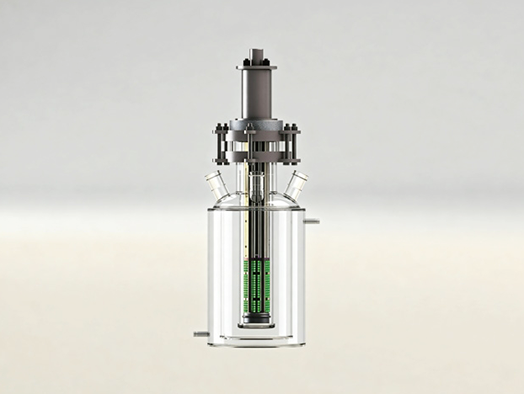
LED photochemical reaction vessels are becoming increasingly important in modern laboratory and industrial chemistry because they support precise, energy-efficient, and scalable light-driven reactions. As photochemistry continues to expand across pharmaceuticals, materials science, green chemistry, and fine chemical manufacturing, the role of the LED photochemical reaction vessel is evolving from a specialized lab tool into a widely adopted processing platform. This growth is driven by the need for better reaction control, lower heat generation, improved reproducibility, and more sustainable production methods.
This page provides a comprehensive, SEO-friendly overview of LED photochemical reaction vessel future applications, including definitions, technical advantages, market-relevant use cases, key specifications, and practical considerations. The content is designed for direct use in blog articles, category pages, industry pages, or educational web sections. It focuses on general industry information only and avoids specific company recommendations.
An LED photochemical reaction vessel is a container or reactor system designed to hold chemical substances while exposing them to controlled LED light sources. The vessel is used to initiate or accelerate photochemical reactions, where light energy drives molecular transformations. Unlike traditional heating-based reactors, a photochemical reaction vessel relies on photons rather than thermal energy as the primary reaction trigger.
These vessels are commonly used in research laboratories, pilot-scale development, and increasingly in production environments. They may be made from glass, quartz, stainless steel, or other chemically resistant materials depending on the application and wavelength range. In many setups, the vessel is combined with stirring, cooling, temperature monitoring, inert gas protection, and wavelength-specific LED illumination.
The defining feature of an LED photochemical reaction vessel is the use of LED light technology. LEDs offer narrow wavelength output, long service life, low heat production, and high electrical efficiency. These characteristics make them especially suitable for photochemical processes that require precise control over light intensity, exposure time, and spectral range.
The rise of the LED photochemical reaction vessel is closely linked to several global trends in chemistry and manufacturing. Industries are seeking safer, cleaner, and more efficient process technologies. At the same time, researchers are exploring novel pathways that were previously difficult or impossible to access using conventional thermal chemistry.
LED-based photochemical systems offer a strong combination of performance and practicality. They can support small-scale development and large-scale process optimization while reducing energy waste and reaction variability. Because many photochemical reactions are highly sensitive to light wavelength and intensity, LED systems provide a level of tuning that is difficult to achieve with older light sources.
Future applications are expected to expand as LED technology improves, reactor design becomes more modular, and more chemical pathways are discovered or optimized for photochemical activation.
To understand future applications, it is important to first examine the key benefits of the LED photochemical reaction vessel. These advantages are the main reasons the technology continues to gain relevance across multiple sectors.
| Advantage | Description | Industry Relevance |
|---|---|---|
| Precise Wavelength Control | LEDs can be selected for specific wavelengths, improving reaction selectivity and consistency. | Research, fine chemicals, pharmaceuticals |
| Low Heat Generation | LED light sources generate less excess heat than many traditional lamps, reducing thermal side effects. | Temperature-sensitive reactions |
| Energy Efficiency | LED systems consume less power, supporting lower operating costs and greener production. | Sustainable manufacturing |
| Long Service Life | LED modules generally last longer, reducing replacement frequency and maintenance needs. | Continuous use environments |
| Improved Safety | Lower heat and reduced reliance on fragile lamps can improve workplace safety. | Laboratories and pilot plants |
| Scalability | LED photochemical systems can be adapted from bench-scale to larger production volumes. | Process development and scale-up |
The working principle of an LED photochemical reaction vessel is based on light-driven energy transfer. When reactants absorb light at a specific wavelength, they may enter an excited state and undergo chemical transformation. This can generate radicals, promote bond cleavage, trigger cyclization, enable isomerization, or facilitate other photochemical pathways.
In a typical system, the vessel holds the reaction mixture while LED emitters surround or illuminate it from one or more directions. The reaction may be stirred to improve uniform exposure, and temperature control may be used to prevent overheating. Some vessels are designed for batch processing, while others are configured for continuous flow or semi-continuous operation.
The quality of the reaction often depends on several variables:
Because of these variables, future LED photochemical reaction vessel designs are expected to emphasize automation, monitoring, and modularity.
The future applications of LED photochemical reaction vessels are broad and continue to expand as photochemistry becomes more practical for industrial use. Below are the major application areas expected to drive growth.
The pharmaceutical industry is one of the most promising fields for LED photochemical reaction vessel adoption. Many drug discovery and development programs rely on photochemical transformations to create complex intermediates, stereoselective products, and novel molecular structures. LED systems can help chemists achieve more reproducible results and better control over sensitive reaction pathways.
Future pharmaceutical applications may include:
Because pharmaceutical production demands high consistency and traceability, LED photochemical vessels with precise monitoring and validation features are likely to see increasing demand.
Fine chemicals often require highly selective transformations and specialized production routes. LED photochemical reaction vessels are well-suited to this environment because they provide the control needed for complex synthesis. Future use cases may include specialty intermediates, performance additives, agrochemical precursors, and high-value custom molecules.
The photochemical route can sometimes reduce reaction steps, improve atom economy, and lower waste generation. This aligns with the industry's ongoing transition toward more efficient and sustainable chemistry.
Materials science is another major growth area for LED photochemical reaction vessel technology. Light-driven processes are increasingly used to synthesize polymers, coatings, adhesives, smart materials, and functional surfaces. The ability to control reaction kinetics with light makes LED systems attractive for developing advanced materials with tailored properties.
Potential future applications include:
As demand grows for high-performance materials in electronics, automotive, aerospace, and biomedical sectors, LED photochemical vessels may become more common in both R&D and production environments.
Green chemistry is one of the strongest drivers behind the future of the LED photochemical reaction vessel. LEDs support lower energy consumption, and photochemical routes can sometimes eliminate harsh reagents, reduce byproducts, and simplify downstream purification. These benefits are particularly valuable in industries aiming to reduce environmental impact and meet sustainability targets.
Future green chemistry applications may involve:
As environmental regulations become stricter, the LED photochemical reaction vessel may become a preferred option for companies seeking cleaner production methods.
Continuous flow systems are increasingly important in modern chemical processing, and LED photochemical reaction vessels are highly compatible with this trend. Flow-based photochemistry often improves light penetration, heat transfer, and reaction scalability. Future systems are expected to integrate LED illumination with continuous processing for higher throughput and better process control.
Advantages of flow-based future applications include:
As process engineers look for efficient ways to translate laboratory chemistry into production, LED photochemical flow vessels may become a standard solution.
Universities, research institutes, and innovation labs continue to play a central role in developing new photochemical methods. LED photochemical reaction vessels are expected to remain essential in this space because they provide flexible control for method screening, mechanism studies, and proof-of-concept experiments.
Future academic applications may include:
Because research demands adaptability, future LED vessels are likely to offer more modular configurations and data integration features.
Although photochemistry is often associated with synthetic organic chemistry, it is also relevant to biotechnology. In some cases, LED light can be used for bioactive compound generation, biosensor development, sterilization-related processing, and controlled activation of light-sensitive substances. As interdisciplinary research expands, more bio-related applications may emerge.
Potential uses include:
These applications may remain niche in the near term, but they represent a promising long-term direction.
The future of the LED photochemical reaction vessel is likely to be shaped by several technology trends. These trends will influence performance, usability, and adoption across industries.
| Trend | Expected Development | Impact on Future Applications |
|---|---|---|
| Multi-Wavelength Systems | More vessels will support multiple LED wavelengths in one platform. | Greater reaction flexibility and broader application range |
| Smart Control Interfaces | Digital control of intensity, timing, and temperature will become more advanced. | Higher precision and better process repeatability |
| Integrated Sensors | Real-time monitoring of temperature, light intensity, and reaction progress will improve. | Better quality control and optimization |
| Modular Reactor Design | Systems will become easier to reconfigure for different vessel sizes and reaction types. | Improved scalability and versatility |
| Flow-Ready Architecture | More LED photochemical vessels will be built for continuous processing. | Higher throughput and industrial adoption |
| Energy Optimization | Improved electrical efficiency and heat management will continue to advance. | Lower operating costs and improved sustainability |
When evaluating an LED photochemical reaction vessel, users typically examine a set of technical specifications. These specifications help determine whether a vessel is suitable for a particular application, scale, or process requirement.
| Specification | Typical Range or Option | Why It Matters |
|---|---|---|
| Vessel Material | Glass, quartz, borosilicate, stainless steel, PTFE-lined systems | Controls chemical resistance and light transmission |
| Light Source Type | Single-color LED, multi-color LED, tunable LED array | Determines reaction wavelength flexibility |
| Wavelength Range | Common UV, visible, and near-visible ranges | Affects which photochemical reactions can be performed |
| Light Intensity | Adjustable output depending on system design | Influences reaction rate and conversion efficiency |
| Reaction Volume | Milliliter scale to pilot-scale volumes | Defines operational scale and throughput |
| Temperature Control | Ambient, cooled, heated, or actively regulated | Prevents unwanted side reactions and thermal degradation |
| Mixing System | Magnetic stirring, overhead stirring, recirculation | Improves reaction uniformity and light exposure |
| Automation Level | Manual, semi-automated, fully automated | Supports process control and repeatability |
| Safety Features | Shielding, interlocks, cooling alerts, overload protection | Improves operator safety and equipment reliability |
Several factors will determine how quickly LED photochemical reaction vessels are adopted in future applications. These factors are important for laboratories, engineering teams, and manufacturing planners.
Not every chemical reaction is suitable for photochemical processing. Adoption depends on whether the target reaction responds effectively to light activation and whether the chosen wavelength matches the photochemical pathway.
Organizations often want a clear path from lab-scale experimentation to industrial-scale implementation. The more scalable the LED photochemical reaction vessel design, the more likely it is to be adopted in production environments.
Initial capital investment, maintenance requirements, and energy use all influence adoption. LED systems are increasingly attractive because they often provide lower long-term operating costs than traditional lamp-based systems.
Industries with strict quality standards require highly reproducible reactions. LED vessels support this need by allowing stable wavelength output, controlled intensity, and repeatable reaction conditions.
As environmental and safety standards continue to evolve, technologies that reduce emissions, energy consumption, and hazardous waste will become more attractive. LED photochemical reaction vessels align well with these goals.
Future-ready LED photochemical reaction vessels will likely incorporate several design improvements to support broader adoption. These design considerations are important for both users and system developers.
The long-term impact of LED photochemical reaction vessel future applications may be significant. As more industries embrace light-driven chemistry, these vessels could reshape how molecules are developed, tested, and manufactured. The technology supports smaller environmental footprints, more precise reaction control, and a wider range of synthesis pathways.
In practical terms, this means faster research cycles, more efficient manufacturing, and greater ability to design reactions around desired outcomes rather than traditional thermal limitations. Over time, LED photochemical systems may contribute to more decentralized production models, on-demand synthesis, and cleaner industrial workflows.
The most important advantage is flexibility. Because LED systems can be tuned to different wavelengths and operating conditions, they can support both standard and emerging photochemical reactions. This makes the LED photochemical reaction vessel a future-facing platform with wide relevance across chemistry-related sectors.
| Feature | LED Photochemical Reaction Vessel | Traditional Light-Based System |
|---|---|---|
| Energy Efficiency | High | Often lower |
| Wavelength Control | Excellent | Less precise |
| Heat Output | Low to moderate | Often high |
| Maintenance | Relatively low | Often higher |
| Lamp Life | Long | Shorter |
| Process Flexibility | High | Moderate |
| Future Scalability | Strong | Limited in some cases |
This article is built around high-value search phrases related to the topic, including LED photochemical reaction vessel, photochemical reaction vessel, LED photochemical reaction vessel future applications, photochemistry reactor, light-driven chemical reaction, photocatalytic reactor, LED reactor system, green chemistry equipment, and continuous flow photochemistry. These terms help support organic search visibility while keeping the content focused on practical industry information.
Looking ahead, the following use cases are likely to become more common as LED photochemical reaction vessel technology advances:
The LED photochemical reaction vessel future applications landscape is expanding rapidly as chemistry, engineering, and sustainability goals converge. LED-based systems are uniquely positioned to support precise, scalable, and energy-efficient photochemical processing across pharmaceuticals, fine chemicals, materials science, green manufacturing, and research environments. Their ability to deliver wavelength-specific illumination with reduced heat and improved control makes them a powerful platform for next-generation chemistry.
As technology advances, future LED photochemical reaction vessels are expected to become more modular, intelligent, and adaptable. This evolution will likely support broader industrial adoption and open new opportunities for light-driven innovation. For organizations exploring future-ready chemical processing tools, the LED photochemical reaction vessel represents a highly relevant and increasingly important technology.
THÊM VÀO:tòa nhà 7, khu công nghiệp Z Acer Z Hi, Lian Tang Ave, thị trấn shanghu, số hàng C, Giang Tô
Điện thoại:0512-65560736 / 0512-65371556
Điện thoại di động:+86 13584913897 / +86 13771738377 (Bán hàng)
E-mail:jkzdhsm@yeah.net
Trang web này sử dụng cookie để đảm bảo bạn có được trải nghiệm tốt nhất trên trang web của chúng tôi.
 English
 Español
 Pусский
 Deutsch
 日本語
日本語 한국어
한국어 हिन्दी
 Indonesia
 Melayu



 Whatsapp
 Điện thoại
Bình luận
(0)