
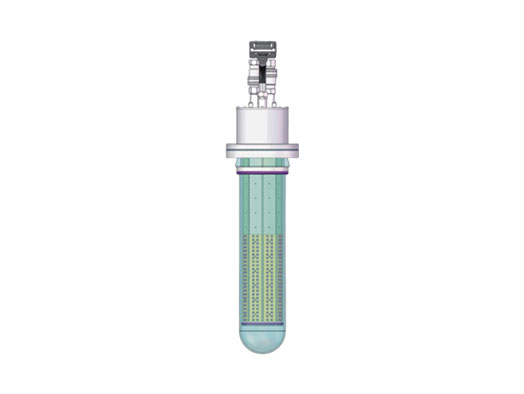
A photochemical reaction vessel is a specialized process container designed to support
light-driven chemical reactions in laboratories, pilot plants, and industrial production environments.
In modern chemical processing, photochemical reaction vessels are used to improve reaction control,
support UV or visible-light irradiation, and enable safer, more efficient synthesis workflows.
For businesses, researchers, and process engineers searching for a photochemical reaction vessel manufacturing process overview,
understanding how these systems are designed, fabricated, tested, and validated is essential for selecting the right equipment and
optimizing performance.
This article provides a comprehensive, SEO-friendly, industry-focused overview of photochemical reaction vessel manufacturing,
including definition, core functions, major materials, production workflow, quality control, technical specifications, advantages,
and application scenarios. The content is written in plain English and structured for easy insertion into a blog post, directory page,
product category page, or industrial knowledge base.
A photochemical reaction vessel is a purpose-built container that allows light to interact with reaction media under controlled conditions.
Unlike standard chemical vessels, photochemical reaction vessels are engineered to maximize light transmission, chemical resistance,
temperature stability, and operational safety. They are commonly used in photochemistry, fine chemical synthesis, pharmaceutical research,
catalyst development, environmental treatment, and advanced materials production.
The vessel may be designed as a batch reactor, a flow reactor chamber, a jacketed reaction vessel, a quartz reactor, or a specialized
light-exposed system with integrated ports, stirring capability, cooling channels, and irradiation windows. The design depends on the
wavelength of light used, the reaction scale, the chemical media, and the process objectives.
The manufacturing process directly affects the optical performance, durability, pressure resistance, sealing reliability, and chemical compatibility
of the vessel. In photochemical applications, even small defects in transparency, wall thickness, geometry, or surface quality can reduce reaction efficiency.
Therefore, precise manufacturing is critical to achieve stable and repeatable results.
High-quality photochemical reaction vessel manufacturing supports:
Photochemical reaction vessels come in multiple configurations depending on the application. The most common types include:
| Type | Main Feature | Typical Use |
|---|---|---|
| Quartz Photochemical Vessel | Excellent UV and visible light transmission | UV-sensitive reactions, photolysis, advanced synthesis |
| Glass Photochemical Vessel | Cost-effective and chemically adaptable | General laboratory photochemistry |
| Jacketed Vessel | Temperature control through circulating fluid | Heat-sensitive photoreactions |
| Flow Photochemical Reactor | Continuous processing and high surface-area exposure | Scale-up and industrial photochemistry |
| Stirred Batch Vessel | Simple operation with mixing control | Research and pilot-scale testing |
| Multi-Port Vessel | Multiple access points for sensors and feeds | Complex process development |
Material selection is one of the most important steps in the photochemical reaction vessel manufacturing process. The chosen material must withstand
chemical exposure, thermal cycling, and mechanical stress while maintaining high optical clarity or controlled light transmittance.
| Material | Key Properties | Advantages |
|---|---|---|
| Quartz | High UV transmission, thermal stability, low contamination risk | Ideal for UV and high-purity photochemical reactions |
| Borosilicate Glass | Good chemical resistance, moderate thermal resistance, easy fabrication | Widely used for laboratory and pilot applications |
| Stainless Steel | Strong, durable, pressure-resistant | Useful for structural components, frames, and hybrid systems |
| PTFE / Fluoropolymers | Excellent chemical inertness | Used for seals, liners, and chemical-contact parts |
| Fused Silica | Superior optical transmission and purity | Used in high-performance optical reactor sections |
The manufacturing process for a photochemical reaction vessel typically includes several carefully controlled stages. Each stage contributes to the final
performance of the vessel in terms of optical efficiency, sealing integrity, structural strength, and operational safety.
The process begins with engineering design. Designers determine the vessel geometry, capacity, irradiation area, port configuration, pressure rating,
thermal control method, and compatibility with specific reaction media. Computer-aided design (CAD) tools are often used to create detailed drawings,
simulate light distribution, and optimize wall thickness and optical windows.
In this stage, manufacturers also define:
After the design is finalized, suitable raw materials are selected. The material must match the intended reaction environment and light source.
For example, UV-based processes often require quartz or fused silica, while less demanding visible-light applications may use borosilicate glass.
Structural parts may require stainless steel or other corrosion-resistant alloys.
Raw material sheets, tubes, rods, or blanks are cut into the required dimensions. Forming operations may include bending, molding, blowing,
pressing, machining, or precision shaping. For glass and quartz vessels, controlled heating and forming are used to achieve the desired geometry
without introducing stress cracks or optical distortion.
Precision machining ensures accurate dimensions, uniform wall thickness, and proper alignment of connection points. In this stage, ports,
flanges, threads, and sealing interfaces are processed to meet strict tolerance requirements. High precision is especially important for vessels
used in automated systems or pressure-sensitive photochemical applications.
Since light transmission is central to photochemical processing, optical surfaces must be treated to reduce scattering, reflectivity, and surface defects.
Polishing, annealing, flame finishing, and surface cleaning may be applied depending on the material. The goal is to ensure that light reaches the reaction
medium with minimal loss.
If the vessel includes multiple parts, they are assembled at this stage. This may involve installing jackets, ports, sensors, gaskets, seals, stirrer mounts,
and irradiation sleeves. Manufacturers must maintain compatibility between materials to prevent leakage, contamination, or thermal mismatch.
Sealing methods are critical in photochemical reaction vessel manufacturing. Depending on the vessel type, joining may be completed through glass fusion,
mechanical fastening, welding, adhesive bonding, or precision gasket compression. Each method must maintain chemical resistance and long-term stability.
Heat treatment may be used to reduce internal stress, improve durability, and stabilize the material structure. For glass and quartz systems, annealing is
often essential to prevent cracking during operation or temperature cycling. This step improves product reliability and service life.
Photochemical systems are highly sensitive to contamination. Therefore, the vessel is thoroughly cleaned to remove dust, oils, residues, and particulate matter.
Cleanroom-style handling or controlled cleaning protocols may be used, especially for pharmaceutical and high-purity applications.
Before shipment, each vessel undergoes rigorous inspection and testing. Quality checks may include dimensional verification, leak testing, pressure testing,
surface inspection, optical clarity assessment, and thermal performance validation. This ensures that the vessel meets technical and safety requirements.
Quality control is an essential part of photochemical reaction vessel manufacturing. The following table summarizes common inspection items:
| QC Item | Purpose | Typical Method |
|---|---|---|
| Dimensional Accuracy | Ensures correct fit and assembly | Calipers, gauges, coordinate measurement |
| Leak Testing | Confirms sealing performance | Pressure hold, vacuum, bubble test |
| Optical Clarity Test | Verifies light transmission quality | Visual and instrument-based inspection |
| Surface Defect Check | Identifies scratches, chips, or inclusions | Microscopic inspection |
| Thermal Stability Test | Ensures resistance to heat cycling | Controlled thermal exposure |
| Chemical Resistance Review | Confirms compatibility with process chemicals | Material verification and exposure testing |
A well-manufactured photochemical reaction vessel provides significant operational advantages across research and production environments.
These advantages are especially important in industries where reaction selectivity, light exposure, and process reproducibility are essential.
When evaluating a photochemical reaction vessel, buyers and engineers usually review a set of standard technical parameters. These specifications
help determine whether the vessel is appropriate for the intended process.
| Specification | Description | Common Range or Example |
|---|---|---|
| Capacity | Reaction volume the vessel can hold | 100 mL to several hundred liters |
| Material Type | Body and component material | Quartz, borosilicate glass, stainless steel |
| Light Transmission Range | Wavelength range supported by the vessel | UV, visible, or broad-spectrum |
| Temperature Range | Safe operating temperature window | Depends on design and material |
| Pressure Rating | Maximum allowable operating pressure | Atmospheric to pressure-rated systems |
| Port Configuration | Number and type of openings | Feed, vent, sensor, drain, sampling |
| Mixing System | Stirring or circulation support | Magnetic stirrer, mechanical agitator |
| Surface Finish | Internal and external smoothness | Polished, cleaned, low-defect finish |
The manufacturing requirements of a photochemical reaction vessel vary according to the end-use application. A vessel designed for laboratory screening
may prioritize optical clarity and flexibility, while a pilot-scale unit may prioritize temperature control, pressure resistance, and structural durability.
Laboratory vessels are usually smaller, easier to handle, and optimized for fast experimentation. Transparency, easy cleaning, and quick setup are important
priorities in this category.
Pilot-scale vessels must balance experimental flexibility with higher throughput. They often require stronger frames, more advanced control features,
and greater attention to thermal management.
Industrial photochemical vessels are built for continuous or semi-continuous operation, long service cycles, and strict process consistency.
In this setting, manufacturing quality, reliability, and maintainability become major selection factors.
Although photochemical reaction vessel manufacturing is well established, it presents several challenges:
For procurement or technical evaluation, buyers should review the vessel against process needs rather than focusing only on price.
A good photochemical reaction vessel should match light source requirements, reaction chemistry, scale, operating conditions, and maintenance expectations.
Useful evaluation questions include:
Photochemical reaction vessels are used across many industries and research fields. Their ability to support controlled light exposure makes them useful in:
The photochemical reaction vessel manufacturing process overview includes design, material selection, precision cutting, forming, machining,
polishing, assembly, sealing, heat treatment, cleaning, and testing. Every step contributes to the performance of the final vessel.
Whether the application is laboratory research, pilot-scale development, or industrial photochemistry, the right vessel design can improve
light transmission, reaction control, safety, and repeatability.
In short, a high-quality photochemical reaction vessel is not just a container; it is a precision-engineered process tool built to support
efficient and reliable light-driven chemistry. Understanding the manufacturing process helps engineers, researchers, and buyers identify
the most suitable solution for their application.
| Category | Key Point |
|---|---|
| Definition | A vessel designed for controlled light-driven chemical reactions |
| Main Materials | Quartz, borosilicate glass, fused silica, stainless steel, PTFE |
| Manufacturing Steps | Design, material selection, forming, machining, polishing, assembly, sealing, testing |
| Main Advantages | Improved light transmission, better safety, chemical resistance, and process control |
| Typical Uses | Laboratory research, pilot plants, industrial photochemistry, environmental processing |
```
THÊM VÀO:tòa nhà 7, khu công nghiệp Z Acer Z Hi, Lian Tang Ave, thị trấn shanghu, số hàng C, Giang Tô
Điện thoại:0512-65560736 / 0512-65371556
Điện thoại di động:+86 13584913897 / +86 13771738377 (Bán hàng)
E-mail:jkzdhsm@yeah.net
Trang web này sử dụng cookie để đảm bảo bạn có được trải nghiệm tốt nhất trên trang web của chúng tôi.
 English
 Español
 Pусский
 Deutsch
 日本語
 한국어
 हिन्दी
 Indonesia
 Melayu



 Whatsapp
 Điện thoại
Bình luận
(0)